schumacher battery charger manual sul code
Schumacher Battery Charger: Understanding the SUL Code
Decoding the Schumacher SUL code is crucial for battery health; it signals potential sulfation, impacting performance and longevity, requiring prompt attention and troubleshooting.
Schumacher has long been a trusted name in battery charging solutions, providing a wide array of chargers for automotive, marine, and general purpose applications. Their chargers are known for their reliability and user-friendly features, designed to extend battery life and ensure optimal performance.
A key aspect of Schumacher’s design philosophy is incorporating diagnostic capabilities, such as error codes, to help users understand the condition of their batteries. The SUL code, specifically, is a vital indicator of a common battery issue – sulfation. Understanding this code and the underlying problem is essential for maintaining your battery and avoiding unexpected failures. Schumacher provides detailed manuals, readily available online through resources like ManualsLib, to guide users through these diagnostic processes and troubleshooting steps.
The Importance of Battery Maintenance
Regular battery maintenance is paramount for maximizing lifespan and ensuring reliable performance, especially in demanding conditions. Ignoring battery health can lead to reduced starting power, decreased runtime for accessories, and ultimately, premature battery failure. Proactive care, including regular charging and cleaning, prevents issues like sulfation – the core problem indicated by the Schumacher SUL code.
Consistent maintenance, as outlined in Schumacher owner’s manuals, can save you money in the long run by delaying the need for costly battery replacements. Simple steps, like wiping away battery fluid after charging (as noted in the SC1308 manual on ManualsLib), contribute significantly to longevity. Addressing a SUL error promptly, potentially through desulfation modes, can often restore a battery’s capacity and prevent complete failure.
Decoding the SUL Error Code
The SUL code from Schumacher chargers signifies detected sulfation, a crystal formation on lead plates, hindering performance and potentially leading to battery failure.
What Does SUL Mean?
SUL, as displayed on a Schumacher battery charger, is an error code indicating sulfation. This isn’t a general charger malfunction, but a diagnostic message related specifically to the battery’s internal condition. The charger detects a low voltage – below 10V for a 12V battery, or 5V for a 6V battery – even after a two-hour charging attempt.
Essentially, the charger is recognizing that the battery isn’t accepting a charge as it should. This often points to the formation of lead sulfate crystals on the battery plates. These crystals build up over time, especially when a battery is left discharged or undercharged for extended periods. The SUL code isn’t necessarily a death sentence for the battery, but it’s a clear warning sign that intervention is needed to attempt restoration.
Sulfation: The Core Issue
Sulfation is the primary problem flagged by the SUL code, representing the formation of lead sulfate crystals within the battery’s cells. During normal discharge, lead sulfate is naturally created, but with regular charging, it’s converted back into lead and sulfuric acid, restoring the battery’s capacity. However, when a battery remains in a discharged state, these crystals harden and accumulate.
This buildup reduces the surface area of the lead plates available for chemical reactions, diminishing the battery’s ability to hold a charge. A sulfated battery exhibits lower cranking power, reduced capacity, and a shorter lifespan. The process is accelerated by prolonged undercharging, infrequent use, and operating a battery in extreme temperatures. Recognizing and addressing sulfation is key to potentially salvaging a battery.
How Sulfation Impacts Battery Performance
Sulfation significantly degrades a battery’s ability to deliver power. As sulfate crystals build up, they physically obstruct the active material on the lead plates, reducing the surface area available for chemical reactions. This directly translates to diminished cranking amps, meaning the battery struggles to start engines, especially in cold weather.
Furthermore, sulfation lowers the battery’s overall capacity – it simply won’t hold a charge for as long. Charging times increase, and the battery may appear to charge fully but quickly lose power under load. Ultimately, severe sulfation leads to premature battery failure, requiring replacement. Addressing sulfation early, when detected by a SUL code, can potentially restore some performance.
Identifying the Cause of the SUL Code
The SUL code often arises from low voltage, prolonged undercharging, or simply an aging battery; diagnosing the root cause is vital for effective resolution.
Low Battery Voltage Trigger
A primary trigger for the SUL code is consistently low battery voltage. Schumacher chargers, like the SC1281 and SC1308, are designed to detect when a 12V battery dips below 10V, or a 6V battery falls under 5V, after a two-hour charging period.
This indicates the battery is struggling to hold a charge, a common precursor to sulfation. The charger interprets this as a potential sulfation issue and displays the SUL error. It’s not necessarily immediate sulfation, but a warning sign. Before assuming sulfation, ensure the battery isn’t simply deeply discharged due to a parasitic drain or infrequent use. A fully charged battery, allowed to sit, will naturally lose voltage over time, but a rapid or significant drop triggers the SUL code.
Addressing this requires initial charging and monitoring to see if the voltage stabilizes.
Prolonged Undercharging
Consistent and prolonged undercharging is a significant contributor to the SUL code. If a battery is repeatedly used without being fully recharged, sulfate crystals begin to form on the lead plates. This process gradually reduces the battery’s capacity and ability to accept a full charge.
Schumacher chargers recognize this pattern. The SUL code isn’t always an immediate indication of severe sulfation, but a warning that the charging habits are leading to it. Short trips, infrequent vehicle use, or relying on minimal charging cycles all contribute to this issue.
Regular, complete charging cycles are vital. Utilizing a battery maintainer can prevent this by ensuring the battery remains topped off, mitigating sulfate crystal formation and avoiding the SUL error.
Battery Age and Condition
A battery’s age and overall condition are critical factors when encountering the SUL code. Older batteries are naturally more susceptible to sulfation due to the gradual breakdown of the lead plates over time. Even with proper maintenance, a battery’s lifespan is finite.
Furthermore, a battery that has experienced deep discharges repeatedly, or has been physically damaged, will exhibit increased sulfation. Internal plate corrosion and shedding also contribute to reduced performance and a higher likelihood of triggering the SUL error.
Schumacher chargers attempt to compensate, but severely degraded batteries may not respond to desulfation efforts. In these cases, the SUL code signals the need for battery replacement rather than continued charging attempts.
Troubleshooting Steps for the SUL Code
Initial checks involve voltage verification and terminal cleaning; attempting desulfation mode can restore battery health, but replacement may be necessary if unsuccessful.
Initial Voltage Check
Performing an initial voltage check is the first critical step when encountering a SUL code on your Schumacher battery charger. The error code itself indicates the charger has detected a potentially sulfated battery, but a low voltage reading confirms this suspicion. According to Schumacher manuals, a 12V battery should ideally measure above 10V, while a 6V battery needs to be at least 5V after a two-hour charging attempt.
Use a multimeter to accurately assess the battery’s voltage. If the reading falls below these thresholds, it strongly suggests significant sulfation or a deeply discharged state. This low voltage prevents the charger from effectively initiating the desulfation process. Ensure the multimeter is properly calibrated and connected to the battery terminals before taking the measurement. A consistently low voltage reading necessitates further investigation and potentially, battery replacement.
Cleaning Battery Terminals and Clamps
Corrosion on battery terminals and clamps significantly hinders charging efficiency and can contribute to a SUL code. Schumacher’s maintenance guidelines emphasize cleaning the clamps after each use to prevent fluid buildup. A corroded connection creates resistance, reducing the current flow needed for effective desulfation. This resistance can also mislead the charger into falsely detecting a sulfated battery.
Disconnect the battery before cleaning. Use a wire brush or a specialized battery terminal cleaning tool to remove any corrosion from both the terminals and the clamps. A baking soda and water solution can neutralize acid buildup, but ensure thorough rinsing and drying afterward. Clean, tight connections are vital for optimal charging and accurate SUL code diagnosis. Regularly maintained terminals ensure a reliable electrical pathway.
Attempting the Desulfation Mode
When a Schumacher charger displays a SUL code, attempting the desulfation mode is a recommended first step. This feature, available on many Schumacher models, applies a specific charging pulse designed to break down sulfate crystals that have formed on the battery plates. The goal is to restore the battery’s capacity and return it to a functional state.
Consult your charger’s manual for specific instructions on activating desulfation mode. The process can take several hours, and success isn’t guaranteed, especially with severely sulfated batteries. Monitor the charger’s progress; if the SUL code persists after a complete desulfation cycle, it indicates the battery may be beyond recovery and require replacement.
Schumacher Charger Features Related to SUL
Schumacher chargers utilize automatic desulfation, voltage monitoring, and clear error code displays, aiding in SUL code interpretation and effective battery maintenance.
Automatic Desulfation Function
Schumacher battery chargers often incorporate an automatic desulfation function, a vital feature when a SUL code is detected. This mode attempts to reverse the sulfation process by applying a specific charging profile. This profile utilizes higher voltage pulses designed to break down the sulfate crystals that accumulate on the battery’s lead plates.
The effectiveness of this function varies depending on the severity of the sulfation. Mild sulfation can often be reversed, restoring some of the battery’s lost capacity. However, heavily sulfated batteries may not respond fully, and the desulfation cycle might only offer a temporary improvement.
It’s important to note that repeated or prolonged sulfation can cause irreversible damage, rendering the desulfation function ineffective. Regularly checking and maintaining your battery can help prevent severe sulfation and maximize the benefits of this feature.
Voltage Monitoring System
Schumacher chargers utilize a sophisticated voltage monitoring system integral to detecting and interpreting the SUL code. This system continuously assesses the battery’s voltage throughout the charging cycle. The SUL error is often triggered when the charger detects a voltage consistently below 10V for a 12V battery, or 5V for a 6V battery, even after a two-hour charging period.
This low-voltage reading is a key indicator of potential sulfation, as sulfate buildup reduces the battery’s ability to hold a charge. The system doesn’t just report the low voltage; it actively uses this data to diagnose the underlying issue and initiate appropriate responses, like activating the desulfation mode.
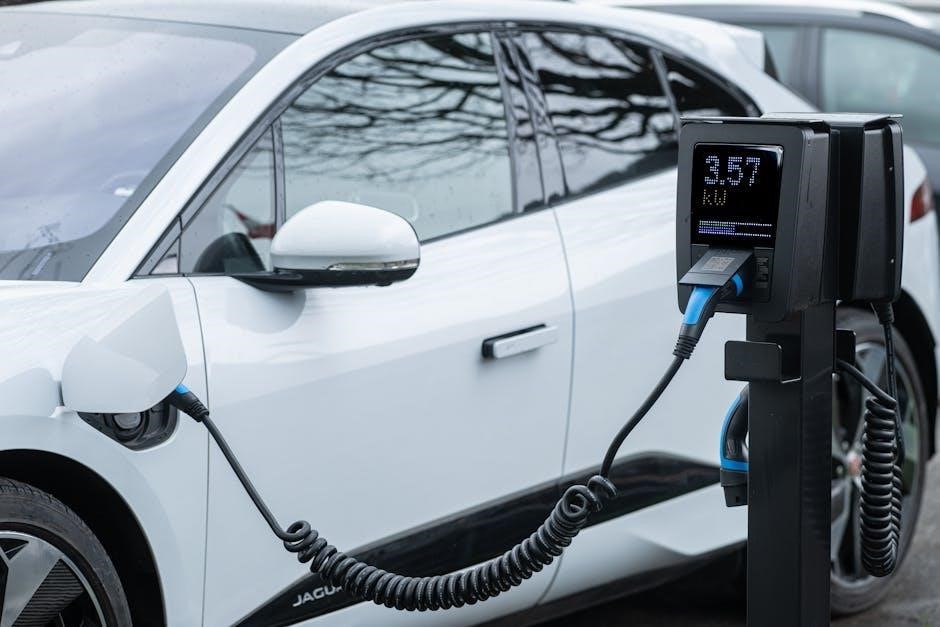
Accurate voltage monitoring is crucial for reliable SUL code detection and effective battery maintenance.
Error Code Display and Interpretation
Schumacher battery chargers feature a clear error code display, prominently showing “SUL” when sulfation is detected. This allows users to quickly identify the problem without needing specialized diagnostic tools. The manual explicitly states that the SUL code signifies the formation of sulfate crystals on the lead plates within the battery.
Understanding this code is vital, as it indicates a potential path to battery failure if left unaddressed. The charger’s interpretation of the SUL code isn’t simply a warning; it’s a trigger for the desulfation mode, aiming to reverse the sulfation process and restore battery capacity.
Properly interpreting the SUL code empowers users to take proactive steps towards battery maintenance and longevity.
Preventing the SUL Code: Best Practices
Regular charging and proper storage are key to preventing the SUL code; utilizing a battery maintainer ensures optimal voltage and minimizes sulfation risks.
Regular Charging Schedules
Establishing a consistent charging routine is paramount in preventing the dreaded SUL code and maintaining optimal battery health. Infrequent use often leads to prolonged undercharging, a primary contributor to sulfation. A Schumacher charger, when connected regularly, can counteract this process.
For batteries used seasonally – like those in motorcycles or boats – a monthly charge during off-season storage is highly recommended. Even frequently used batteries benefit from occasional “topping off” charges. This proactive approach ensures the battery remains fully charged, minimizing the formation of lead sulfate crystals.
Consider the battery’s type and usage when determining the ideal schedule. Deep-cycle batteries, for example, require more frequent and thorough charging than starting batteries. Adhering to a schedule, coupled with proper storage techniques, significantly reduces the likelihood of encountering the SUL error.
Proper Storage Techniques
Correct battery storage is vital to avoid sulfation and the resulting SUL code on your Schumacher charger. When storing a battery for extended periods, ensure it’s fully charged before storage; a depleted battery sulfates much faster. Store the battery in a cool, dry place, avoiding extreme temperatures, as heat accelerates self-discharge and sulfation.
Disconnect the battery terminals to prevent parasitic drain. Avoid storing batteries directly on concrete floors, as this can encourage discharge. Using a battery tray or wooden pallet provides insulation. Regularly check the voltage during storage, and top it off with a Schumacher charger if it drops below 12.4 volts for a 12V battery.
Proper storage, combined with regular charging, dramatically extends battery life and minimizes the chances of encountering the SUL error, ensuring reliable performance when you need it.
Using a Battery Maintainer
A battery maintainer is a proactive solution to prevent the sulfation that triggers the SUL code on Schumacher chargers. Unlike traditional chargers, maintainers deliver a low, continuous charge, keeping the battery at its optimal voltage without overcharging. This prevents the formation of lead sulfate crystals, the root cause of the SUL error.
Schumacher offers various maintainer models designed for long-term battery health. Connecting a maintainer is simple: plug it in and attach the clamps to the battery terminals. The maintainer automatically adjusts the charge as needed, ensuring the battery remains fully charged and ready for use.
Regular use of a battery maintainer significantly extends battery life, reduces the risk of encountering the SUL code, and provides peace of mind, knowing your battery is always in top condition.

Specific Schumacher Models and the SUL Code
Schumacher models like SC1308, SC1280, and SC1281 all report the SUL code when detecting battery sulfation, each with unique error handling approaches.
SC1308 and SUL Error Handling
The Schumacher SC1308 charger displays the SUL code to indicate significant battery sulfation, a condition where lead sulfate crystals build up on the battery plates. This buildup hinders the battery’s ability to accept and hold a charge, ultimately reducing its performance and lifespan.
According to the SC1308 owner’s manual available on ManualsLib, regular cleaning of the clamps is vital for optimal function. The SUL error suggests a need for desulfation, a process the SC1308 may attempt automatically. However, persistent SUL codes often point to a severely sulfated battery requiring professional attention or eventual replacement. Maintaining a clean charging environment and promptly addressing the SUL code are key to maximizing battery life when using the SC1308.
SC1280 and SUL Error Reporting
The Schumacher SC1280 charger utilizes the SUL error code to specifically alert users to battery sulfation. As discussed on ClassicOldsmobile.com forums, encountering a SUL error with the SC1280 signifies that the charger has detected the formation of sulfate crystals on the battery’s lead plates. This is a critical indicator, as sulfation progressively diminishes battery capacity and its ability to deliver sufficient starting power.
The SC1280’s error reporting system is designed to prompt action. While the charger may attempt a desulfation cycle, a recurring SUL code suggests the sulfation is too advanced for automatic correction. In such cases, battery testing and potential replacement should be considered to avoid complete battery failure and ensure reliable vehicle operation.
SC1281 and SUL Code Diagnostics
The Schumacher SC1281 charger’s diagnostic capabilities regarding the SUL code are quite specific. According to the SC1281’s owner’s manual, available on ManualsLib, the SUL error indicates the charger has detected a sulfated battery. More precisely, the code triggers if the battery voltage remains below 10V (for a 12V battery) or 5V (for a 6V battery) even after two hours of charging.
This low-voltage threshold after a charging period is the key diagnostic element. It suggests the battery isn’t accepting a charge due to significant sulfation hindering the chemical reactions. The SC1281 may initiate a desulfation attempt, but persistent SUL codes necessitate further investigation, potentially including professional battery testing or replacement.
When to Seek Professional Help
If the SUL code persists despite troubleshooting, or if you suspect charger malfunction, consult a professional; battery replacement may be necessary.
Battery Replacement Considerations
Determining battery replacement is vital when the SUL code consistently appears, even after attempting desulfation. A severely sulfated battery may not recover fully, impacting its ability to hold a charge. Consider the battery’s age; a battery nearing the end of its lifespan is less likely to benefit from desulfation efforts.
Evaluate the battery’s overall condition – physical damage, bulging, or corrosion are clear indicators of needing a replacement. When choosing a new battery, ensure it matches the voltage and capacity requirements of your vehicle or application. Investing in a quality battery will provide reliable performance and prevent recurring SUL errors. Proper disposal of the old battery is also crucial, following local environmental regulations.
Charger Malfunction Diagnosis
If the SUL code persists despite a healthy battery, suspect a charger malfunction. Verify the charger’s output voltage with a multimeter to ensure it’s delivering the correct power. Inspect the charging clamps for damage or corrosion, as these can disrupt the charging process and trigger false error codes.
Check the charger’s internal components for any signs of damage, such as blown fuses or burnt wiring. A faulty voltage monitoring system could misinterpret battery conditions, leading to an incorrect SUL diagnosis. If you’re uncomfortable disassembling the charger, consult a qualified technician for professional assessment and repair. Ignoring a malfunctioning charger can lead to further battery damage or safety hazards.
Safety Precautions
Always prioritize safety when dealing with batteries and chargers. Wear appropriate eye protection and gloves to shield against acid splashes and potential burns. Ensure adequate ventilation during charging, as batteries release flammable hydrogen gas. Never charge a frozen battery, as it may explode.
Disconnect the charger from the power outlet before connecting or disconnecting it from the battery. Avoid short-circuiting the battery terminals, as this can cause severe damage and injury. If the charger exhibits any signs of malfunction, such as sparks or smoke, immediately disconnect it and seek professional assistance. Proper handling and adherence to safety guidelines are crucial for preventing accidents and ensuring a safe charging experience.

Resources and Manuals
Accessing manuals from ManualsLib, Tartan Kilts, and ClassicOldsmobile forums provides valuable insights into Schumacher chargers and troubleshooting the SUL code effectively.
ManualsLib for Schumacher Chargers
ManualsLib serves as a comprehensive online repository for Schumacher battery charger manuals, offering readily available documentation for various models like the SC1308 and SC1281. These manuals are invaluable when encountering the SUL error code, providing detailed explanations of its meaning – specifically, the detection of battery sulfation.
Users can find specific troubleshooting steps outlined within these guides, including initial voltage checks and instructions for cleaning battery terminals. The SC1308 manual, for example, emphasizes regular cleaning to maintain charger functionality. Furthermore, ManualsLib details the automatic desulfation function present in many Schumacher chargers, offering guidance on utilizing this feature to potentially restore battery health when a SUL code appears. Accessing these resources empowers users to diagnose and address the issue independently.
Tartan Kilts Download Guide
Surprisingly, Tartan Kilts offers a download guide that includes access to Schumacher battery charger manuals, specifically focusing on understanding and resolving the SUL code. This resource highlights the SUL code as an indicator of sulfation, a critical issue affecting battery performance.
The guide emphasizes that the SUL code directs users towards utilizing the charger’s desulfation mode, a feature designed to restore battery health by attempting to break down sulfate crystals. It underscores the importance of having the correct manual for your specific Schumacher model to interpret the code accurately and follow the recommended procedures. This unexpected source provides essential instructions for effectively operating your charger and addressing the SUL error, ensuring optimal battery maintenance and longevity.
ClassicOldsmobile.com Forums
Discussions on ClassicOldsmobile.com forums reveal user experiences with the Schumacher SUL error code, particularly concerning the SC1280 model and Starfire batteries. Members report the SUL code signifies battery sulfation – the formation of crystals on lead plates, ultimately leading to battery failure.
Forum posts detail how the error appears, prompting concern about a potentially failing battery, even in relatively new units (12 months old in some cases). Users share insights into interpreting the manual’s explanation of the SUL code and discuss whether the error warrants immediate battery replacement or if attempting the charger’s desulfation function might offer a solution. This platform provides a valuable space for troubleshooting and shared knowledge regarding the SUL code and its implications.