preschool readiness checklist pdf
Preschool Readiness Checklist PDF: A Comprehensive Guide
This guide offers a free printable checklist, simplifying the process of understanding crucial early childhood skills—literacy, math, social-emotional growth, and motor development.
Understanding Preschool Readiness
Preschool readiness isn’t about academic prowess; it’s about a child’s holistic development – social, emotional, cognitive, and physical. Determining if a child is prepared involves assessing their ability to navigate a classroom environment, follow instructions, and interact positively with peers.
A preschool readiness checklist helps parents and caregivers identify key milestones. It acknowledges that children develop at varying paces, offering a framework for support, not strict evaluation. It’s about fostering independence, building confidence, and ensuring a positive first school experience.
This isn’t a pass/fail test, but a tool to pinpoint areas where a child might benefit from extra encouragement or practice before starting preschool. Recognizing these skills helps create a smoother transition and sets the stage for a successful learning journey.
Why Use a Preschool Readiness Checklist?
Utilizing a preschool readiness checklist provides clarity and reduces anxiety for both parents and children. It transforms the ambiguous question of “Is my child ready?” into a series of observable skills. This checklist offers a structured approach to assess development across multiple domains, highlighting strengths and areas needing attention.
It facilitates open communication with preschool teachers, allowing for collaborative support tailored to the child’s individual needs. A checklist empowers parents to proactively address potential challenges, fostering a smoother transition.
Furthermore, it’s a stress-free guide, avoiding pressure and overwhelm, focusing instead on supporting natural learning. It’s a valuable tool for understanding what truly matters in early childhood development, beyond academic expectations.
Developmental Domains Assessed
A comprehensive preschool readiness checklist evaluates a child’s development across several key areas. These typically include social-emotional skills, assessing separation anxiety and interaction with peers. Language and literacy are examined, focusing on receptive and expressive language, alongside phonological awareness—rhyming and sound recognition.
Cognitive skills, such as problem-solving, early math concepts (counting, shapes), and attention span, are also crucial. The checklist extends to physical development, evaluating both fine motor skills (pencil grip, scissor use) and gross motor skills (running, jumping, climbing).
This holistic approach ensures a well-rounded assessment, identifying strengths and areas where additional support might be beneficial before starting preschool.

Key Skills for Preschool Success
Preschool success hinges on a blend of social-emotional maturity, language abilities, cognitive skills, and both fine and gross motor development—all assessed via checklists.
Social-Emotional Development
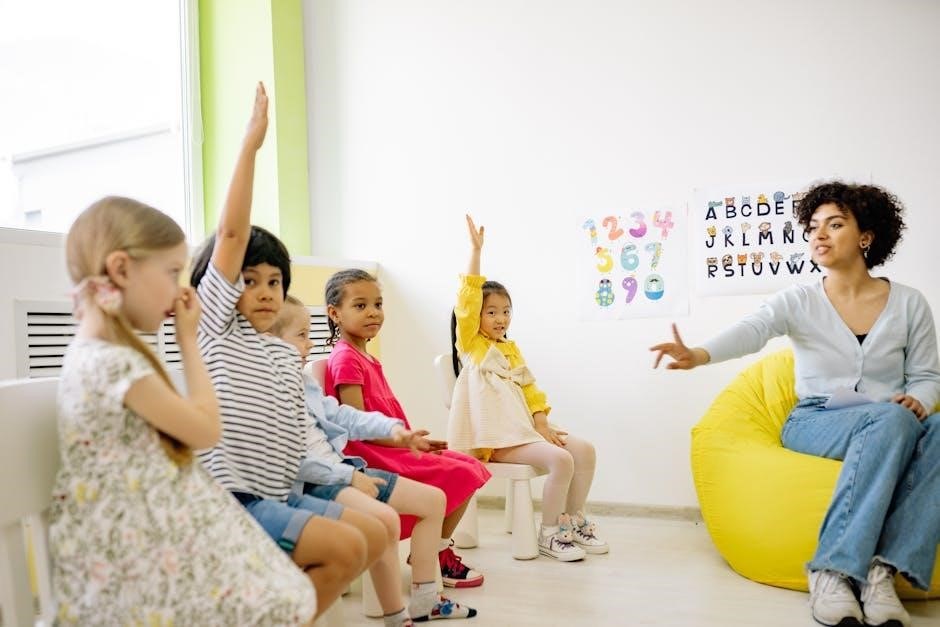
Social-emotional skills are foundational for a positive preschool experience. A key indicator is the ability to separate confidently from primary caregivers, acknowledging some initial tears are normal during adjustment.
Children should demonstrate increasing comfort with other caregivers, benefiting from short, gradually lengthening playdates to build confidence. Successfully following simple instructions, even those with two parts (“Please get your shoes and put them by the door”), signifies readiness.
Furthermore, positive interactions with peers – sharing, taking turns, and engaging in cooperative play – are vital. These skills demonstrate a child’s emerging ability to navigate the social landscape of a classroom and form positive relationships.
Separation Anxiety & Comfort with Caregivers
Separation anxiety is common, but a preschooler should demonstrate the ability to separate from their main caregiver, even if initial tears occur while adjusting to the new environment. This indicates emerging independence and trust.
Building comfort with other caregivers is crucial. Parents can facilitate this by arranging short play sessions with trusted adults or friends, progressively increasing the duration of time spent apart. This gradual exposure helps build confidence and reduces anxiety.
A child ready for preschool will show a willingness to engage with new adults and accept comfort from them, demonstrating a broadening circle of trust beyond immediate family. Positive interactions signal emotional readiness.
Following Simple Instructions
Preschoolers should be able to understand and follow simple instructions, ideally those with one or two parts. This demonstrates developing listening skills and the ability to process information. For example, a child should be able to respond to requests like “Please get your shoes.”
Parents can practice this skill during playtime by giving two-step directions, such as “Please get your shoes and put them by the door.” Consistent practice reinforces comprehension and encourages compliance.
Successfully following instructions is foundational for classroom participation and learning. It shows a child is developing the cognitive skills necessary to engage in structured activities and benefit from teacher guidance.
Interacting with Peers
Positive peer interactions are a key indicator of social-emotional readiness for preschool. Children should demonstrate an ability to engage with other children, even if it’s just parallel play initially. Sharing toys, taking turns, and responding to other children’s cues are important milestones.
Preschool provides a crucial environment for developing these social skills. Opportunities for guided playdates and interactions with children of similar ages can help build confidence and foster positive relationships.

While some initial shyness is normal, a child should show a willingness to approach and interact with peers, demonstrating developing empathy and social awareness. This skill is vital for a successful preschool experience.
Language & Literacy Skills
Strong language and literacy foundations are essential for preschool success. This includes both receptive language – understanding what is said – and expressive language – the ability to communicate thoughts and needs clearly. Children should be able to follow simple, two-part instructions and engage in basic conversations.
Phonological awareness, the understanding of sounds within words, is also crucial. Recognizing rhyming words and identifying beginning sounds are early literacy skills that prepare children for reading. Exposure to books, storytelling, and playful language activities significantly supports development.
A preschooler doesn’t need to read before starting, but a love of language and a developing vocabulary are key indicators of readiness.
Receptive Language (Understanding)
Receptive language skills refer to a child’s ability to comprehend information. A preschooler ready for school should understand simple questions and follow directions containing two steps, like “Please get your shoes and put them by the door.” They should also be able to point to familiar objects when named and understand basic concepts like “big” and “small.”
Consistent exposure to language through conversations, reading aloud, and storytelling is vital for building receptive language. Observing how a child responds to instructions and questions provides valuable insight into their understanding.
Difficulty understanding simple requests may indicate a need for further support.
Expressive Language (Speaking)
Expressive language focuses on a child’s ability to communicate their thoughts and needs. A preschooler should be able to speak in short sentences – typically three to five words – and be understood by familiar adults most of the time. They should also be able to name common objects and express themselves clearly, even if pronunciation isn’t perfect.
Encouraging conversation, asking open-ended questions, and providing opportunities for storytelling can foster expressive language development. Pay attention to whether the child initiates conversations and uses a variety of words.
Limited vocabulary or difficulty forming sentences might suggest a need for speech and language support.
Phonological Awareness (Rhyming, Sounds)
Phonological awareness is the ability to recognize and manipulate the sounds of spoken language. This foundational skill is crucial for later reading success. A preschooler should demonstrate an emerging awareness of rhyming – recognizing when words sound alike – and be able to identify beginning sounds in words.
Engaging in playful activities like rhyming games, singing songs, and reading aloud can significantly boost phonological awareness. Simple exercises like asking “What sounds does ‘cat’ start with?” are beneficial.
Difficulty with rhyming or identifying sounds may indicate a need for focused pre-literacy activities.
Cognitive Skills
Cognitive skills encompass a child’s ability to think, learn, and solve problems. Preschoolers should exhibit developing problem-solving abilities, demonstrated through simple puzzles or figuring out how things work. Early math concepts, like counting to ten and recognizing basic shapes (circle, square, triangle), are also key indicators.
Attention span and focus are vital; a child should be able to engage in a single activity for a reasonable period, given their age. This doesn’t mean hours of uninterrupted play, but rather a capacity to concentrate for short bursts.
Supporting cognitive development involves providing stimulating activities and encouraging exploration.
Problem-Solving Abilities
Problem-solving skills in preschoolers emerge through play and exploration. Observe if your child attempts to figure things out independently, rather than immediately seeking help. Can they complete simple puzzles – perhaps with 4-6 pieces? Do they try different approaches when faced with a challenge, like building a tower that keeps falling down?
Encourage this skill by presenting age-appropriate challenges and resisting the urge to instantly provide solutions. Instead, ask guiding questions like, “What could you try next?” or “What happened when you did that?”
Successful problem-solving builds confidence and a growth mindset.
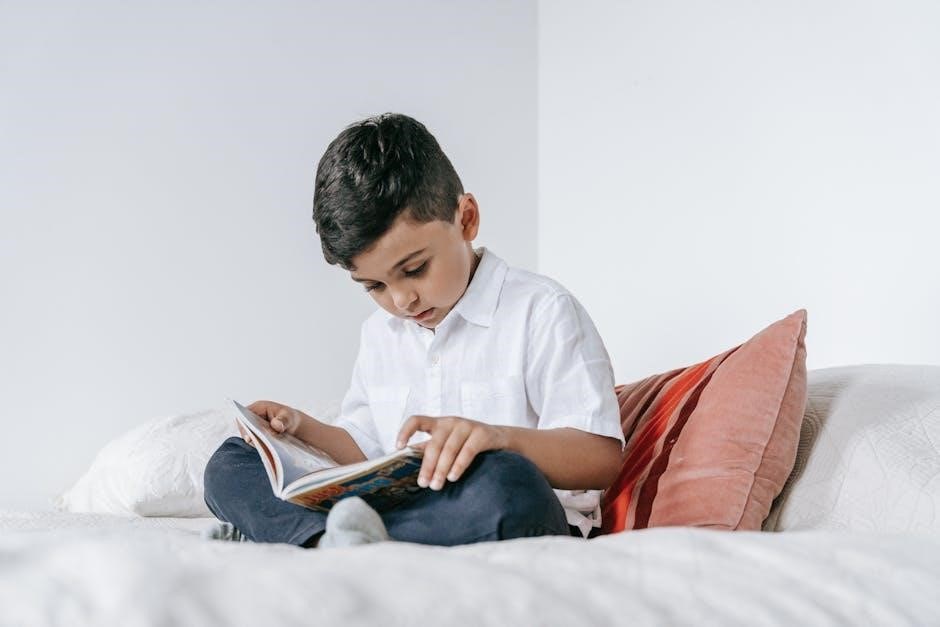
Early Math Concepts (Counting, Shapes)
Early math skills aren’t about formal calculations; they’re about foundational understanding. Can your child count to ten, even if the order isn’t perfect? Do they recognize basic shapes like circles, squares, and triangles? Can they sort objects by color, size, or shape?
Introduce these concepts playfully through everyday activities. Count toys during cleanup, point out shapes on walks, or sort laundry together. Use math vocabulary naturally – “more,” “less,” “bigger,” “smaller.”
A solid grasp of these early concepts sets the stage for future mathematical success, fostering logical thinking and problem-solving abilities.
Attention Span & Focus
Preschool doesn’t demand long periods of sustained attention, but the ability to focus on a task for a short duration is vital. Can your child sit and listen to a short story, or engage in a simple activity like building with blocks for 5-10 minutes?
Observe their engagement during playtime. Are they easily distracted, or can they maintain interest in an activity? Short, focused bursts are typical at this age.
Encourage focus by minimizing distractions during activities and providing age-appropriate, engaging materials. Remember, building attention span is a gradual process, and patience is key.
Fine & Gross Motor Skills
This section assesses physical development, including hand-eye coordination, dexterity, and large muscle movements—essential for various preschool activities and overall independence.
Fine Motor Skills (Hand & Finger Dexterity)
Developing fine motor skills is crucial for preschool success, enabling children to confidently engage in essential classroom tasks. A key indicator is the ability to hold a pencil or crayon with a reasonable grip, facilitating early writing and drawing explorations.
Furthermore, using scissors safely and with some control demonstrates hand strength and coordination, vital for cutting and crafting activities. These skills aren’t about perfection, but about demonstrating emerging control and willingness to attempt these tasks;
Observe if your child can string beads, manipulate small objects, or attempt to copy simple shapes. Remember, progress varies, and practice makes perfect! This checklist helps pinpoint areas for playful support.
Holding a Pencil/Crayon
Successfully holding a pencil or crayon, even if it’s not a perfect tripod grasp, signifies developing hand strength and control – foundational for writing readiness. Observe how your child grips the tool; a relaxed, functional grip is more important than strict form at this stage.
Can they make marks on paper with intention? Do they attempt to copy lines or shapes? These are positive indicators. Encourage exploration with various writing tools – crayons, markers, colored pencils – to foster comfort and experimentation.
Don’t push for perfection; focus on building confidence and enjoyment. This skill is a stepping stone, and playful practice is key. A readiness checklist highlights this milestone for focused support.
Using Scissors
Proficiency with scissors demonstrates hand-eye coordination, bilateral coordination (using both hands together), and fine motor control – essential skills for preschool success. Look for a child who can hold scissors correctly (thumb in one hole) and make a snip.
Initially, simple cutting along a line or snipping paper into pieces is sufficient. Don’t expect precise cuts; the focus is on the action and coordination. Safety scissors with rounded tips are crucial for this stage.
A preschool readiness checklist acknowledges this skill as a developmental milestone. Encourage scissor practice through playful activities like cutting playdough or assisting with simple crafts, fostering confidence and skill development.
Gross Motor Skills (Large Muscle Movements)
Gross motor skills are fundamental for a child’s physical development and overall readiness for preschool. A preschool readiness checklist assesses abilities like running and jumping, indicating strength, coordination, and balance. Observe if your child can run without frequent stumbling and jump with both feet.
Climbing and balancing are also key indicators. Can they climb onto low structures safely and maintain balance for a few seconds? These skills build confidence and spatial awareness.
Remember, development varies. The checklist isn’t about perfection, but about identifying areas where support might be beneficial. Encourage active play to nurture these essential gross motor skills.
Running & Jumping
Running and jumping are vital gross motor skills assessed in a preschool readiness checklist, demonstrating a child’s developing coordination and strength. Observe if your child can run forward, even if it’s not perfectly smooth, without consistently falling. Can they initiate a run and change direction with some control?
Jumping skills are also important. A child ready for preschool should be able to jump with both feet, even if it’s just a small hop. Look for attempts to jump over small objects, showing emerging spatial awareness.
These skills aren’t about athletic prowess, but about foundational movement patterns. Encourage active play to foster these abilities!
Climbing & Balancing
Climbing and balancing skills are key indicators of gross motor development, frequently included in a preschool readiness checklist. Observe your child’s ability to climb on age-appropriate playground equipment, like small steps or low climbing structures, with reasonable coordination and safety awareness.
Balancing is also crucial. Can your child stand on one foot for a brief moment, even with some wobbling? Walking along a line, or attempting to walk on a low balance beam, demonstrates developing balance control.
These skills build confidence and spatial awareness. Always supervise climbing activities and ensure a safe environment for exploration and practice!
Using a Preschool Readiness Checklist PDF
PDF checklists provide a simple, stress-free way to assess your child’s skills, supporting natural learning without pressure, focusing on key developmental areas.
Free Printable Checklist Resources
Numerous online resources offer free printable preschool readiness checklists, designed to help parents gauge their child’s developmental progress; These checklists typically cover a range of skills, including social-emotional maturity, language abilities, cognitive skills, and both fine and gross motor development.
Many educational websites and parenting blogs provide downloadable PDFs, often categorized by age or skill area. Searching for “preschool readiness checklist PDF” will yield a variety of options. These resources are invaluable for identifying areas where your child excels and areas that might benefit from additional support or practice before starting preschool; Remember to choose checklists from reputable sources to ensure accuracy and relevance.
Utilizing these free checklists empowers parents to proactively prepare their children for a successful and enjoyable preschool experience.
Interpreting the Results – What if My Child Isn’t Checking All the Boxes?
It’s crucial to remember that a preschool readiness checklist isn’t a rigid pass/fail test. Every child develops at their own pace, and not mastering every skill before preschool is perfectly normal. If your child doesn’t check all the boxes, it simply highlights areas where they might benefit from focused support and practice.
Don’t feel pressured to “catch up” immediately. Instead, view the checklist as a guide for playful learning activities. Focus on strengthening areas where your child shows less confidence. Consider incorporating games and activities that target those specific skills.
Remember, preschool teachers are equipped to support children at various developmental levels, and a little extra help at home can make a big difference.
Working with Preschool Teachers
Open communication with your child’s preschool teacher is key. Share your preschool readiness checklist results and any observations you’ve made at home. This provides valuable insight into your child’s strengths and areas where they might need extra support.
Preschool teachers can offer tailored strategies and activities to help your child thrive in the classroom. They can also share how they’re addressing specific skills within the curriculum.
Regular check-ins – whether through parent-teacher conferences or brief emails – foster a collaborative partnership. Working together ensures a smooth transition and maximizes your child’s preschool experience, building confidence and a love for learning.
When to Seek Professional Guidance
While the preschool readiness checklist is a helpful tool, it’s not a definitive diagnosis. If your child consistently demonstrates significant delays across multiple developmental domains, seeking professional guidance is advisable. This includes concerns about language, social-emotional skills, or motor development.
Consult with your pediatrician, a child psychologist, or an early childhood specialist. They can conduct a comprehensive evaluation to identify any underlying issues and recommend appropriate interventions.
Early intervention is crucial for addressing developmental challenges and ensuring your child reaches their full potential. Remember, seeking help is a sign of strength, and it can make a significant difference in your child’s long-term success.