clyde hart 400m training pdf
Clyde Hart 400m Training Program: A Detailed Plan
Clyde Hart’s 400m program‚ detailed in available PDFs and YouTube videos‚ emphasizes a unique blend of speed‚ speed-endurance‚ and special endurance work.
Resources from Flotrack and Championship Productions showcase his methods.
Clyde Hart‚ renowned for coaching Olympic champions like Michael Johnson and Steve Kerr‚ developed a 400m training philosophy centered around building a robust aerobic base before aggressively pursuing speed. This contrasts sharply with approaches prioritizing early-season maximal velocity work. His methods‚ documented in various resources including PDFs and YouTube content‚ aren’t simply about running fast; they’re about strategically developing the physiological systems necessary to sustain speed throughout the entire race.
Hart believed in a progressive overload principle‚ carefully layering training stress to avoid injury and maximize adaptation. He emphasized the importance of relaxed running mechanics‚ even at high speeds‚ believing tension was a significant limiter. A key tenet was the development of “speed endurance” – the ability to maintain near-maximal velocity as fatigue sets in. This wasn’t achieved through simply running longer repetitions‚ but through carefully structured workouts‚ like the famous 300m repeats‚ designed to target specific energy systems.
Resources like those found on Flotrack and through Championship Productions demonstrate Hart’s holistic approach‚ encompassing not just track work‚ but also strength training‚ flexibility‚ and recovery. His philosophy wasn’t a rigid set of rules‚ but a framework adaptable to the individual athlete‚ always prioritizing intelligent training over blindly following a plan.
II. Key Principles of the Hart Method
The Clyde Hart method revolves around several core principles‚ consistently highlighted in training materials and YouTube presentations. Firstly‚ a prolonged General Preparation (Base Building) phase is crucial‚ focusing on aerobic development and injury prevention. This phase builds the foundation for more intense work later in the program.
Secondly‚ Hart prioritized relaxed running mechanics. He believed that tension significantly hindered performance‚ advocating for drills and conscious effort to maintain fluidity even at high speeds. This is a recurring theme in resources from Flotrack and other coaching platforms.
Thirdly‚ the development of speed endurance is paramount. This isn’t simply about running fast for a long time‚ but about maintaining velocity as fatigue accumulates. Workouts like 300m repeats‚ a cornerstone of his program‚ are specifically designed to target this capacity.
Finally‚ Hart emphasized the importance of a progressive overload‚ gradually increasing training stress to stimulate adaptation. He also stressed the need for adequate recovery and individualized training plans‚ recognizing that each athlete responds differently. PDFs detailing his programs often showcase this adaptable approach.
III. Program Structure: Phases of Training
Clyde Hart’s 400m training program is meticulously structured into distinct phases‚ a framework often detailed in available PDF resources and demonstrated in YouTube videos. The initial phase‚ General Preparation (Base Building)‚ typically spans several weeks‚ focusing on building aerobic capacity and foundational strength. This phase minimizes intensity and maximizes volume.
Following the base phase is Speed Development‚ where the emphasis shifts to improving maximum velocity. Shorter sprints‚ drills‚ and plyometrics dominate this stage. This is then transitioned into Speed Endurance work‚ designed to maintain speed under fatigue‚ utilizing repeats like 300m and 200m.
The program culminates in a Special Endurance (Race Pace) phase‚ where workouts closely mimic the demands of the 400m race. This phase refines pacing strategy and prepares the athlete for the specific physiological challenges of the event.
Throughout these phases‚ Hart advocated for periodization‚ systematically varying training volume and intensity to optimize performance and prevent plateaus. Resources from Flotrack highlight the cyclical nature of his approach.
IV. Phase 1: General Preparation (Base Building)
The General Preparation phase‚ foundational to Clyde Hart’s 400m program – often outlined in training PDFs – prioritizes establishing a robust aerobic base and overall physical conditioning. This initial phase‚ lasting several weeks‚ deliberately avoids high-intensity work‚ focusing instead on volume and technique.
Typical workouts include moderate-paced runs of varying distances‚ often incorporating fartlek training to introduce subtle changes in speed. Strength training during this phase centers on building general strength and muscular endurance‚ utilizing exercises like squats‚ lunges‚ and core work. Flexibility and mobility drills are also emphasized to prevent injuries.
Hart believed in developing a strong foundation before introducing specialized speed work. This phase aims to improve the athlete’s cardiovascular system‚ strengthen supporting muscles‚ and refine running mechanics. The goal isn’t to achieve peak speed‚ but to prepare the body for the more demanding phases to come‚ as demonstrated in YouTube resources.
Proper recovery is crucial during this phase‚ allowing the body to adapt to the increased training load.
V. Phase 2: Speed Development
Phase 2 of Clyde Hart’s 400m training‚ detailed in available PDF resources‚ shifts the focus towards developing maximum speed. Building upon the aerobic base established in Phase 1‚ this stage introduces higher-intensity interval training. Workouts are shorter in duration but performed at significantly faster paces.
Key components include frequent 200m repeats‚ often with full recovery between repetitions‚ to emphasize top-end speed. These repeats are crucial for improving stride length‚ stride frequency‚ and overall running mechanics. Acceleration drills‚ such as flying 30s‚ are also incorporated to enhance the athlete’s ability to reach maximum velocity.
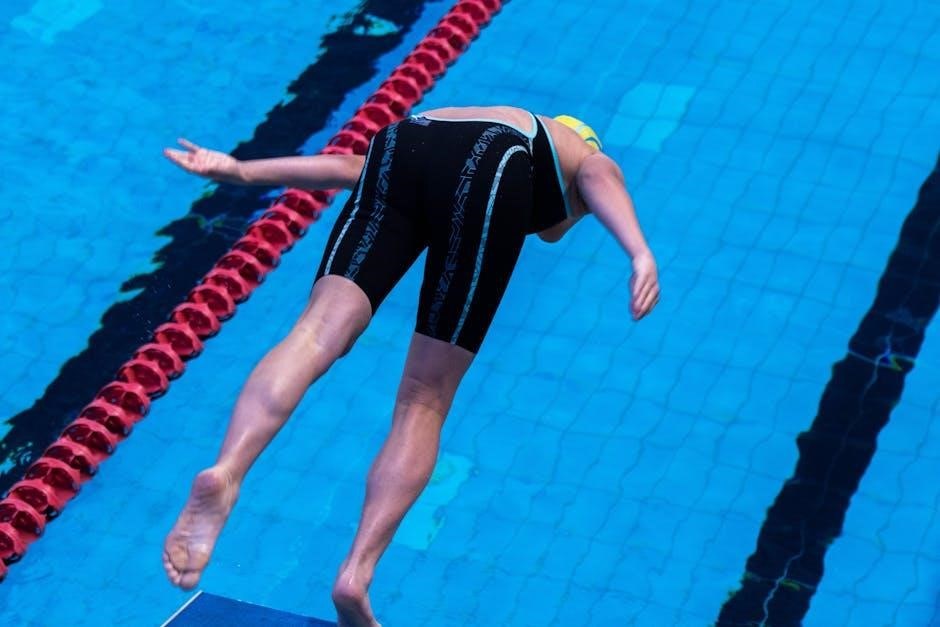
Strength training transitions to focus on power development‚ utilizing exercises like Olympic lifts and plyometrics. This phase aims to translate the general strength gained in Phase 1 into explosive power. YouTube videos showcasing Hart’s methods highlight the importance of proper form and technique during these high-speed workouts.
Monitoring fatigue and ensuring adequate recovery are paramount to prevent injuries and maximize adaptation.
VI. Speed Endurance Workouts
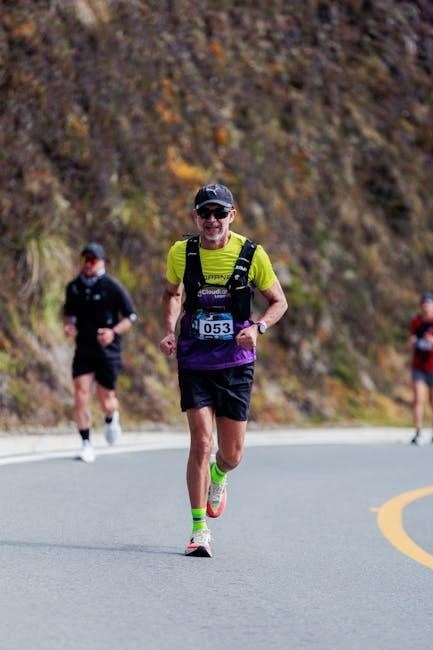
Clyde Hart’s speed endurance workouts‚ as outlined in training PDFs and demonstrated in YouTube resources‚ are central to 400m success. This phase bridges the gap between pure speed and the demands of racing‚ developing the ability to maintain high velocity under fatigue.
A hallmark of Hart’s approach is the use of extended repetitions at near-race pace. Workouts frequently involve 300m repeats‚ a cornerstone of his program‚ performed with controlled recovery periods. These repetitions build lactic tolerance and improve the athlete’s capacity to clear metabolic byproducts.

Other key workouts include 200m repeats with shorter recoveries‚ designed to enhance speed endurance at a faster pace. These are often incorporated alongside the 300m work to provide a varied stimulus. The volume and intensity are carefully progressed throughout the phase.
Proper pacing and consistent splits are emphasized to ensure the workouts effectively target the desired energy systems. Recovery between sets and workouts is crucial to allow for adaptation and prevent overtraining.
VII. Phase 3: Special Endurance (Race Pace)
Phase 3‚ focusing on special endurance – training at race pace – is the culmination of Clyde Hart’s 400m program‚ detailed in available PDFs and YouTube videos. This phase aims to refine the athlete’s ability to execute the race strategy with precision and efficiency.
Workouts during this phase closely mimic the demands of a 400m race. Longer repetitions‚ such as 300m and 200m repeats‚ are performed at goal race pace‚ with recovery intervals mirroring those expected during competition. The emphasis shifts from building endurance to honing race execution.
Hart’s program incorporates over-distance runs‚ like 500m or 600m repetitions‚ to build confidence and mental toughness. These runs are not about maximal speed‚ but about maintaining form and pacing under fatigue.
Crucially‚ this phase includes simulated races‚ allowing athletes to practice their start‚ acceleration‚ and pacing strategies in a competitive environment. Careful monitoring of splits and physiological responses is essential for making adjustments and optimizing performance.
VIII. 300m Repeats – A Cornerstone of the Program
300m repeats form a central component of Clyde Hart’s renowned 400m training program‚ as detailed in various PDF resources and instructional YouTube videos. These repetitions are not simply about speed; they’re strategically designed to develop the specific endurance required to maintain pace through the critical second half of the 400m race.
Hart advocated for performing 300m repeats at a pace slightly faster than the athlete’s target race pace. This overspeed work builds both speed and the ability to resist fatigue. Recovery intervals are carefully controlled‚ typically ranging from 3-5 minutes‚ to allow for near-full recovery between repetitions.
The volume of 300m repeats varies depending on the phase of training‚ starting with lower volumes during the early stages and gradually increasing as the athlete progresses. The focus is on maintaining consistent splits throughout the set‚ demonstrating control and endurance.
These repeats are often incorporated with varied recovery methods‚ including jogging or walking‚ to simulate the demands of a race. Flotrack and other resources highlight the importance of proper form and technique during these key workouts.
IX. 200m Repeats and Their Role
While 300m repeats are a cornerstone‚ 200m repetitions play a crucial‚ complementary role in Clyde Hart’s 400m training system‚ as outlined in available PDF training guides and demonstrated in YouTube instructional videos. These shorter repeats primarily focus on developing raw speed and improving running mechanics.
Hart utilized 200m repeats at significantly faster than race pace‚ pushing athletes to their maximum velocity. This high-intensity work enhances stride frequency and overall speed capability. Recovery intervals are typically longer than those used for 300m repeats‚ allowing for almost complete restoration before the next repetition.
The volume of 200m repeats is generally higher than that of 300m repeats‚ enabling athletes to accumulate more time at maximum speed. These workouts are often performed early in the training cycle‚ building a foundation of speed that will be refined later with race-pace work.
Resources like those found on Flotrack emphasize the importance of maintaining excellent form throughout these high-speed repetitions‚ preventing injury and maximizing efficiency. They serve as a vital component in preparing the athlete for the demands of the 400m.
X. Recovery and Regeneration Techniques
Clyde Hart’s training philosophy‚ detailed in various PDF resources and YouTube presentations‚ didn’t solely focus on intense workouts; recovery and regeneration were equally prioritized. He understood that adaptation occurs during recovery‚ not during the stress of training itself.
Active recovery was a key component‚ involving light jogging‚ walking‚ and dynamic stretching to promote blood flow and remove metabolic waste products. Hart advocated for avoiding complete rest‚ believing that continued movement aided the recovery process.
Adequate sleep was non-negotiable‚ with Hart emphasizing the importance of 8-9 hours of quality sleep per night. Nutritional recovery‚ focusing on replenishing glycogen stores and repairing muscle tissue‚ was also crucial. This included a diet rich in carbohydrates and protein.
While specific details on advanced techniques like massage or contrast therapy are less prominent in readily available materials‚ the underlying principle of prioritizing recovery is consistently highlighted. Flotrack resources and training guides underscore that neglecting recovery will lead to plateaus and increased injury risk.
XI. Importance of Strength Training

Clyde Hart’s 400m training program‚ as outlined in available PDF documents and YouTube videos‚ placed significant emphasis on strength training as a foundational element for success. He didn’t view strength work as merely building muscle mass‚ but as a crucial component for injury prevention and enhancing running mechanics.
Hart believed that a strong core was paramount‚ providing stability and efficient power transfer throughout the running stride. Strength training wasn’t limited to the lower body; upper body strength was also incorporated to maintain proper form and arm drive.

The focus wasn’t on maximal lifts‚ but rather on developing functional strength and power. Exercises were chosen to mimic the demands of the 400m race‚ improving the athlete’s ability to maintain form under fatigue. Resources from Flotrack and related training materials highlight the importance of this holistic approach.
Hart’s approach prioritized consistent‚ year-round strength work‚ adjusted in intensity and volume based on the phase of training. This ensured athletes were resilient and prepared for the rigors of the competitive season.
XII. Sample Strength Training Exercises for 400m Runners
Based on Clyde Hart’s principles‚ detailed in training PDFs and YouTube resources‚ a comprehensive strength program for 400m runners would include a variety of exercises. Core stability was key‚ with exercises like planks (various variations)‚ Russian twists‚ and leg raises forming a foundation.
Lower body work focused on power and functional strength. This included squats (back and front)‚ lunges (forward‚ reverse‚ lateral)‚ step-ups‚ and hamstring curls. Plyometrics‚ such as box jumps and bounding‚ were incorporated to develop explosive power.
Upper body exercises‚ though not the primary focus‚ were essential for maintaining form. These included pull-ups (or lat pulldowns)‚ push-ups‚ and dumbbell rows. Flotrack materials often demonstrate variations of these exercises.
Hart emphasized proper form over heavy weight. The goal was to build strength endurance‚ enabling athletes to maintain technique throughout the entire 400m race. Consistent‚ controlled movements were prioritized‚ with a focus on quality over quantity.
XIII. Flexibility and Mobility Drills
Clyde Hart’s training philosophy‚ as outlined in available PDF resources and YouTube videos‚ placed significant emphasis on flexibility and mobility. He believed a full range of motion was crucial for efficient running mechanics and injury prevention.
Dynamic stretching formed a key part of the warm-up routine. Examples included leg swings (forward‚ backward‚ and lateral)‚ arm circles‚ torso twists‚ and high knees. These movements prepared the muscles for the demands of training.
Static stretching was reserved for the cool-down‚ holding each stretch for 20-30 seconds. Focus areas included hamstrings‚ quadriceps‚ hip flexors‚ calves‚ and shoulders. This helped to improve flexibility and reduce muscle soreness.
Mobility drills‚ such as ankle rotations‚ hip circles‚ and thoracic spine rotations‚ were incorporated to improve joint range of motion. Flotrack content often showcases these drills. Hart understood that mobility was just as important as flexibility for optimal performance.
XIV; Warm-up and Cool-down Protocols
Clyde Hart’s 400m training‚ detailed in various PDF guides and YouTube presentations‚ meticulously structured warm-up and cool-down phases. He viewed these as non-negotiable components of every session‚ vital for both performance enhancement and injury mitigation.
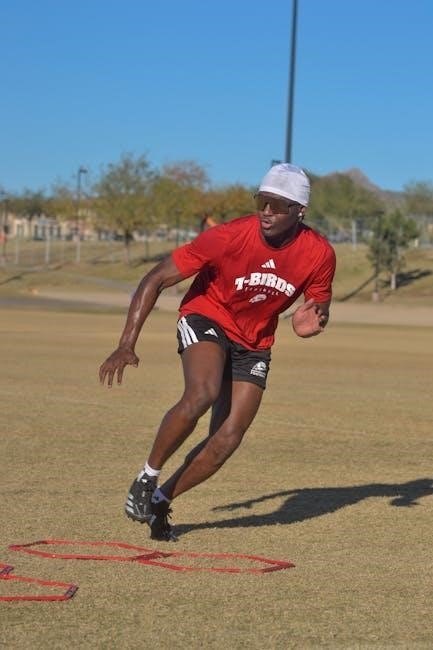
The warm-up began with light cardio – typically 5-10 minutes of jogging – followed by dynamic stretching; This progressed to running drills‚ like A-skips‚ B-skips‚ and butt kicks‚ gradually increasing intensity. Specific drills mirrored the demands of the workout.
The cool-down mirrored the warm-up in reverse. It started with light jogging to reduce heart rate‚ followed by static stretching‚ holding each stretch for 20-30 seconds. Emphasis was placed on major muscle groups used during the session.
Flotrack videos demonstrate Hart’s emphasis on controlled movements during both phases. He believed a thorough warm-up primed the nervous system‚ while a proper cool-down aided recovery and reduced muscle stiffness. These protocols were integral to his success.
XV. Analyzing Race Performance and Adjustments
Clyde Hart’s approach to race analysis‚ documented in training PDFs and showcased in YouTube content‚ wasn’t simply about times; it was a deep dive into the how and why of performance. He stressed meticulous record-keeping of splits‚ feelings‚ and external factors like weather.
Hart didn’t solely rely on stopwatch data. He’d observe athletes’ running mechanics‚ looking for inefficiencies or breakdowns in form‚ particularly in the final 100m. Video analysis was a key tool‚ allowing for detailed scrutiny.
Adjustments weren’t knee-jerk reactions. He’d correlate race data with training logs‚ identifying patterns. Was fatigue a factor? Was pacing off? Were specific drills lacking impact? This informed subsequent training blocks.
Resources from Flotrack highlight his emphasis on individualized adjustments. What worked for one athlete wouldn’t necessarily work for another. Hart’s system was adaptive‚ constantly refined based on athlete feedback and objective data. He believed in a holistic view of the athlete.
XVI. Nutrition for 400m Sprinters

While specific dietary plans aren’t extensively detailed in readily available Clyde Hart 400m training PDFs‚ the underlying principles are clear: fuel performance and recovery. Hart’s philosophy‚ as gleaned from YouTube interviews and related resources‚ prioritized a balanced approach.
Carbohydrates were central‚ providing the primary energy source for intense 400m efforts. He advocated for strategic carbohydrate loading before key competitions‚ but not to the extent of causing discomfort.
Protein intake was crucial for muscle repair and adaptation‚ particularly given the demanding nature of sprint training. He emphasized consistent protein consumption throughout the day‚ not just post-workout.
Hydration was non-negotiable. Maintaining optimal fluid balance was vital for performance and preventing cramping. Resources like those found on Flotrack indirectly support this through discussions of athlete preparation.
Hart’s approach wasn’t about restrictive dieting‚ but about providing the body with the nutrients it needed to thrive under a heavy training load. He understood the importance of fueling the engine for peak performance.
XVII. Psychological Aspects of Training
Although detailed psychological strategies aren’t explicitly laid out in available Clyde Hart 400m training PDFs‚ his coaching philosophy‚ as presented in YouTube videos and discussions‚ implicitly prioritized mental fortitude. Hart understood the 400m is as much a mental battle as a physical one.

He fostered a belief in his athletes’ ability to push through discomfort‚ emphasizing the importance of maintaining form even when fatigued. This required building confidence and a strong work ethic.
Visualization techniques were likely employed‚ encouraging athletes to mentally rehearse successful races. This mental preparation aimed to reduce anxiety and enhance focus during competition.
Hart’s coaching style‚ often described as demanding yet supportive‚ likely contributed to athletes developing resilience. He instilled a sense of responsibility and accountability;
Resources like those on Flotrack highlight the mental toughness required for success in the 400m‚ indirectly supporting the importance Hart placed on psychological preparation. He aimed to cultivate athletes who were mentally prepared to execute their race plan under pressure.
XVIII. Common Mistakes to Avoid
Analyzing Clyde Hart’s 400m training‚ gleaned from available PDFs and YouTube resources‚ reveals several common pitfalls athletes should avoid. A primary error is neglecting the foundational base-building phase‚ rushing into high-intensity work before adequate preparation.
Another mistake is inconsistent pacing. Hart’s program emphasizes controlled speed endurance; starting too fast and fading is a frequent issue. Athletes must learn to maintain a consistent pace throughout the race.
Insufficient recovery is also detrimental. Overtraining‚ without adequate rest and regeneration‚ leads to plateaus and injuries. Following the program’s phased approach is crucial.
Ignoring proper form under fatigue is a significant error. Maintaining technique‚ even when tired‚ is vital for efficiency and injury prevention‚ a point emphasized in Flotrack analyses of his methods.
Finally‚ failing to adapt the program to individual needs is a mistake. While Hart’s principles are sound‚ adjustments based on athlete response and progress are necessary for optimal results. Blindly following the plan without self-awareness hinders improvement.

XIX. Resources and Further Learning (PDFs & Videos)
Delving deeper into Clyde Hart’s 400m training methodology requires exploring available resources. YouTube is a valuable starting point‚ with numerous videos dissecting his program – notably‚ content from sources like the link provided (https://www.youtube.com/watch?v=DN6NbKH3hJo) offering insights into his techniques.
While comprehensive PDF documents directly from Hart are scarce‚ resources from Flotrack (https://www.flotrack.org/video/5386797-clyde-harts-200400m-sprint-training-program) provide detailed analyses of his training philosophy.
Championship Productions also offers training programs influenced by Hart’s methods‚ accessible through YouTube and their website. Searching for “Clyde Hart training” yields further discussions and athlete testimonials.
Websites like Pinterest (https://ru.pinterest.com/pin/championship-productions-youtube–726486983627928841/) curate links to relevant videos and articles; Remember to critically evaluate information and cross-reference sources.
Exploring these resources will provide a more nuanced understanding of Hart’s approach to 400m training‚ enabling athletes and coaches to implement his principles effectively.