holy god we praise thy name pdf
I. The Hymn: Identity and Historical Origins

The hymn‚ Holy God‚ We Praise Thy Name‚ derives from the ancient Latin Te Deum laudamus. Its German counterpart‚ Großer Gott‚ wir loben dich‚ is attributed to Ignaz Franz in 1774. Clarence A. Walworth provided the English translation in 1858‚ establishing its widespread recognition.
A. Full Title: Holy God‚ We Praise Thy Name
The full title‚ “Holy God‚ We Praise Thy Name‚” immediately conveys the core purpose of this revered hymn: an act of profound adoration and glorification directed towards the divine. This eight-verse composition serves as a fervent declaration of praise for God‚ emphasizing His sacred nature and infinite majesty. Within its lines‚ the hymn meticulously glorifies the Holy Trinity—Father‚ Son‚ and Holy Spirit—underscoring their unified essence as the undivided God; It intricately portrays a magnificent celestial scene where angels and seraphim in heaven raise their harmonious voices in ceaseless song‚ joining all creation in extolling God’s boundless dominion and His everlasting reign. The repetition of “Holy” three times within the hymn powerfully reinforces the sanctity and revered character of the Almighty. Furthermore‚ the title encapsulates the hymn’s call for all beings‚ both earthly and heavenly‚ to humble themselves and worship before the singular‚ mysterious God. It is a beloved Catholic and Christian hymn that champions the supremacy of God‚ portraying Christ as the glorious King and Son of God‚ enthroned in splendor. The title itself is an invitation to acknowledge and celebrate God’s unparalleled holiness and sovereign rule over all existence.
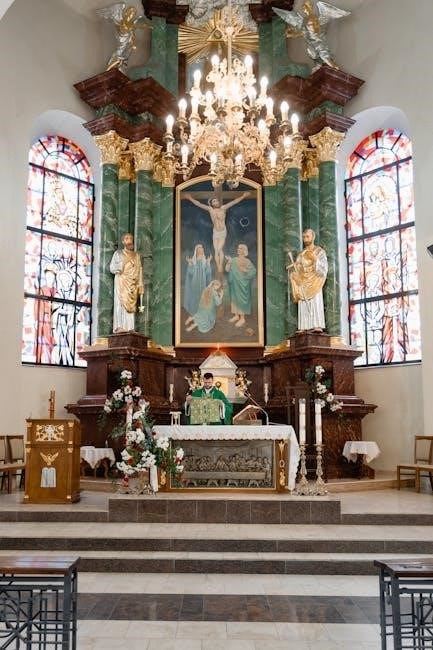
B. Original German Title: Großer Gott‚ wir loben dich
The hymn’s original German title‚ Großer Gott‚ wir loben dich‚ directly translates to “Great God‚ we praise Thee‚” profoundly articulating its central theme of divine adoration. This foundational title emerged into widespread use through its inclusion in the influential Katholisches Gesangbuch Maria Theresa in 1774. It is this German rendition that is attributed to the Catholic priest Ignaz Franz (1719-1790)‚ who significantly shaped its lyrical form and theological depth. The hymn‚ in its original language‚ passionately praises God and glorifies the Holy Trinity—Father‚ Son‚ and Holy Spirit—as the undivided God. It vividly describes angels and seraphim raising their voices in harmonious song‚ celebrating God’s infinite dominion and everlasting reign‚ echoing the ancient roots of the Te Deum laudamus. The German title itself became a beloved staple within Catholic and broader Christian communities across German-speaking regions‚ establishing the profound worship and veneration that would later be carried into the English translation; Its enduring appeal lies in its powerful declaration of God’s holiness and supremacy‚ serving as the direct textual source for subsequent adaptations and solidifying its place in sacred music history.
C. Ancient Roots: Te Deum laudamus
The hymn “Holy God‚ We Praise Thy Name” draws its profound spiritual and textual lineage directly from the ancient Latin hymn‚ the Te Deum laudamus. This venerable text‚ whose origins date back to approximately the 4th century‚ is traditionally attributed to figures like St. Nicetas of Remesiana (ca; 335-414). The Te Deum serves as one of Christianity’s most enduring expressions of praise and thanksgiving‚ a liturgical cornerstone used extensively in Western Christian worship for centuries. Its core theological elements‚ such as the adoration of the Holy Trinity – Father‚ Son‚ and Holy Spirit – are faithfully preserved and expanded upon in the later adaptations. The ancient hymn glorifies God’s infinite dominion and everlasting reign‚ depicting angels‚ seraphim‚ and all creation in continuous worship. Furthermore‚ it extols Christ as the glorious King and Son of God‚ who humbly took on human form for deliverance. These fundamental themes‚ deeply embedded within the Te Deum laudamus‚ provided the rich doctrinal and poetic framework upon which both the German Großer Gott‚ wir loben dich and its revered English translation were built‚ ensuring a continuous spiritual heritage across millennia.
D. Attribution to Ignaz Franz (1774)
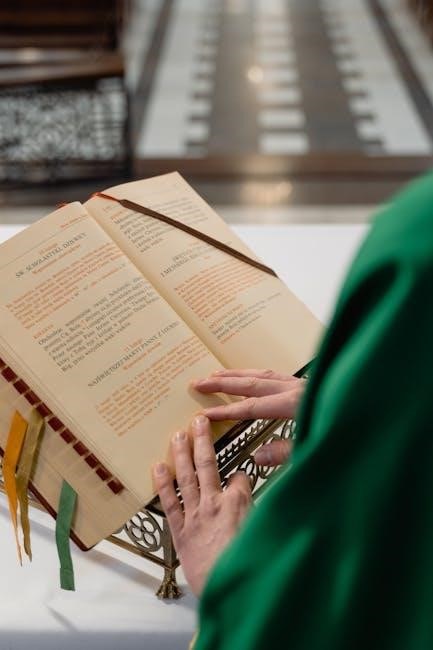
The prominent German version of this revered hymn‚ Großer Gott‚ wir loben dich‚ is widely attributed to the German Catholic priest‚ Ignaz Franz. Born in 1719 and passing away in 1790‚ Franz played a pivotal role in shaping this text‚ which became a cornerstone of Catholic and Christian hymnody. His significant contribution is largely associated with the year 1774‚ when his rendition appeared in the Katholisches Gesangbuch Maria Theresa. This publication marked a crucial moment for the hymn‚ firmly establishing its German identity and making it accessible to a broader congregation. Franz’s adaptation skillfully translated the profound theological sentiments of the ancient Latin Te Deum laudamus into a vernacular form‚ resonating deeply with worshipers. By doing so‚ he facilitated the hymn’s enduring popularity and its eventual journey into other languages‚ including the English translation. His work in 1774 cemented the hymn’s place in liturgical practice‚ allowing its powerful message of divine praise and glorification to flourish across generations.
E. Translation by Clarence A. Walworth (1858)
Clarence A. Walworth‚ an American priest and hymnologist‚ is credited with the widely used English translation of Holy God‚ We Praise Thy Name in 1858. Born in 1820 and passing in 1900‚ Walworth’s work was instrumental in bringing the profound theological depth of the German Großer Gott‚ wir loben dich and its ancient Latin predecessor‚ the Te Deum laudamus‚ to English-speaking worshipers. His translation captured the essence of divine praise and the glorification of the Holy Trinity‚ resonating with congregations across various Christian denominations. Before Walworth’s rendition‚ the hymn was less accessible to those unfamiliar with German or Latin. His 1858 translation provided a lyrical and devotional text that quickly gained popularity‚ becoming a staple in hymnals. This significant contribution allowed millions to engage with the hymn’s powerful message of adoration for God’s infinite dominion and everlasting reign. Walworth’s translation facilitated the hymn’s journey into widespread liturgical and personal use‚ ensuring its legacy as a beloved expression of faith for centuries to come. His careful choice of words ensured both theological accuracy and poetic beauty‚ making it a timeless spiritual offering.

II. Theological Themes and Glorification
This hymn profoundly praises God‚ glorifying the Holy Trinity: Father‚ Son‚ and Holy Spirit. It depicts angels and seraphim adoring God’s infinite dominion and everlasting reign. It calls all creation to worship the undivided Trinity‚ acknowledging Christ as glorious King.

A. Praise for the Holy Trinity
The hymn Holy God‚ We Praise Thy Name is centrally dedicated to the profound praise of the Holy Trinity. It articulates a fundamental Christian doctrine‚ offering deep adoration to God in His triune nature. The text consistently calls for worship of the “undivided God‚” recognizing the mysterious unity of three persons in one divine essence. This act of praise underscores a complete surrender and reverence‚ as worshippers are invited to “bow before and worship the undivided Trinity.” The hymn reiterates God’s holiness‚ a quality intrinsic to the Trinitarian being‚ thereby elevating the solemnity of the glorification. It is a powerful declaration of faith‚ where the collective voice joins to acclaim the singular‚ yet multi-faceted‚ divine reality. This specific section of the hymn ensures that the focus remains steadfastly on the unified adoration of the Holy Trinity‚ encapsulating the core sentiment of acknowledging and exalting the ultimate mystery of God as Three-in-One. This inspires profound awe and devotion from all who sing its verses‚ echoing ancient traditions of Trinitarian reverence.
B. Glorification of Father‚ Son‚ and Holy Spirit
The hymn Holy God‚ We Praise Thy Name meticulously glorifies each person of the Holy Trinity: Father‚ Son‚ and Holy Spirit. The Father is celebrated as the “Lord of all‚” whose “scepter claim” extends over “all on earth” and whose “vast domain” is “infinite‚” with an “everlasting reign.” This exalts God the Father as the supreme sovereign‚ deserving universal adoration. Christ‚ the Son of God‚ is specifically lauded as the “glorious King‚ enthroned in splendor.” The hymn acknowledges His divine majesty yet profoundly recognizes His humility in surrendering “all honors” and being “of a virgin born humbly” to bring deliverance. The Holy Spirit is revered alongside the Father and Son‚ as worshippers proclaim‚ “Holy Father‚ Holy Son‚ Holy Spirit‚ Three we name Thee.” This collective invocation underscores the Spirit’s co-equal divinity and integral role within the undivided Godhead‚ ensuring that all three persons receive distinct yet unified glorification as the hymn calls for adoration of the mysterious “undivided God.”
C. God’s Infinite Dominion and Everlasting Reign
The hymn Holy God‚ We Praise Thy Name powerfully asserts God’s boundless authority and eternal kingship. It declares‚ “Lord of all‚ we bow before Thee! All on earth Thy scepter claim‚ All in Heaven above adore Thee; Infinite Thy vast domain‚ Everlasting is Thy reign.” This profound statement highlights God as the supreme ruler‚ whose governance extends universally without limits. His “infinite domain” encompasses all creation‚ from the smallest elements on earth to the farthest reaches of heaven‚ signifying a boundless realm over which He presides. The concept of an “everlasting reign” further emphasizes the timeless and perpetual nature of His rule. God’s dominion is not subject to the constraints of time or change; it is an eternal reality that has no beginning and no end. This theme calls upon all beings‚ both earthly and celestial‚ to recognize and revere His undisputed and unending sovereignty‚ reinforcing His ultimate power and majesty.
D. Angels‚ Seraphim‚ and All Creation’s Adoration
The hymn “Holy God‚ We Praise Thy Name” beautifully depicts a grand cosmic scene of worship. Angels and seraphim in heaven raise their voices in harmonious song to praise God with fervent devotion. This divine adoration extends universally‚ encompassing “all on earth” who claim God’s scepter and “all in Heaven above” who adore Him. The text highlights a continuous stream of praise‚ suggesting that “from morn to set of sun‚” through the Church‚ this song of veneration goes on; It vividly describes these heavenly hosts acknowledging God’s infinite dominion and everlasting reign with profound reverence. This collective act symbolizes the profound adoration across all creation‚ celestial and terrestrial‚ for the Almighty. Every part of the universe is called to bow before and worship the undivided Trinity‚ affirming God’s supreme authority and majesty. God’s holiness elicits an eternal chorus of adoration from every corner of existence.
E. Christ as Glorious King and Son of God
Within the profound theological tapestry of “Holy God‚ We Praise Thy Name‚” Christ is unequivocally celebrated as the “glorious King” and the eternal “Son of God.” The hymn portrays Him enthroned in celestial splendor‚ a testament to His divine majesty and inherent authority. Despite this supreme position‚ the narrative highlights a pivotal act of humility: Christ’s willingness to surrender all honors to bring deliverance to humanity. This profound sacrifice is further emphasized by His miraculous birth from a virgin‚ an event that occurred “humbly on that blessed morn.” He is recognized as the “Holy Son” within the undivided Trinity‚ solidifying His co-equal status with the Father and the Holy Spirit. This acknowledgment of Christ as both divine monarch and humble savior is central to the hymn’s message‚ compelling all believers to adore and recognize His pivotal role in salvation. His reign is interwoven with God’s infinite dominion‚ ensuring His perpetual glorification.

III. Musical Settings and Arrangements

Principal tunes for this hymn are Te Deum‚ Hursley‚ and Grosser Gott. Settings from Katholisches Gesangbuch Maria Theresa (1774) and Hymns Ancient and Modern (1869) are key. Arrangements exist for choir‚ keyboard‚ brass‚ SATB‚ and mixed ensembles.
A. Principal Tunes: Te Deum‚ Hursley‚ Grosser Gott
The hymn “Holy God‚ We Praise Thy Name” is prominently set to three principal tunes: Te Deum‚ Hursley‚ and Grosser Gott. The “Te Deum” setting draws directly from the ancient Latin hymn‚ offering a majestic and historically rich musical foundation that emphasizes the hymn’s venerable roots. This rendition often carries a sense of classical liturgical dignity‚ suitable for grand worship. The “Hursley” tune presents a more accessible‚ yet deeply devotional‚ melodic option. It is recognized for its graceful flow and suitability for congregational singing‚ providing a contemplative atmosphere that allows the profound text to resonate intimately with worshippers. Then there is “Grosser Gott‚” intrinsically tied to the hymn’s German origins as “Großer Gott‚ wir loben dich.” This powerful tune‚ often characterized by its 78 78 77 meter‚ emerged from the Katholisches Gesangbuch Maria Theresa in 1774. It conveys a triumphant and steadfast praise‚ underpinning the hymn’s declarations of God’s infinite dominion and everlasting reign. These distinct musical interpretations ensure the hymn’s broad appeal and versatility in various worship contexts‚ from solemn cathedral performances to vibrant communal singing‚ each tune adding its unique character to the glorification of God.
B. Settings from Katholisches Gesangbuch Maria Theresa (1774)
The Katholisches Gesangbuch Maria Theresa‚ published in 1774‚ holds a foundational place in the musical history of “Holy God‚ We Praise Thy Name.” This significant collection‚ which emerged during a period of liturgical reform‚ was instrumental in standardizing Catholic hymnody within the Austrian Empire. It is within this hymnal that the iconic tune “Grosser Gott‚ wir loben dich” (Grosser Gott) found its prominent setting. This specific musical arrangement‚ often characterized by its robust 78 78 77 meter‚ provided the melodic framework that would become inextricably linked with Ignaz Franz’s German text. The settings from this 1774 publication imbued the hymn with a solemn yet triumphant character‚ perfectly complementing its theological themes of divine praise and glorification of the Holy Trinity. Its inclusion in such an authoritative hymnal ensured its widespread adoption and enduring legacy‚ influencing countless subsequent editions and arrangements. The rhythmic and harmonic structure established in the Katholisches Gesangbuch Maria Theresa remains a primary reference point for musicians and congregations today‚ preserving the hymn’s historical sound and spiritual depth in contemporary worship.

C. Settings from Hymns Ancient and Modern (1869)
“Hymns Ancient and Modern‚” specifically its 1869 edition‚ proved pivotal in popularizing “Holy God‚ We Praise Thy Name” among English-speaking Protestant congregations. This influential hymnal‚ known for its extensive scope and musical quality‚ adopted the hymn‚ often utilizing the “Grosser Gott” or “Te Deum” tunes. The “Setting: Hymns Ancient and Modern‚ 1869‚ alt.” indicates deliberate adaptation for wider congregational use. This inclusion significantly broadened the hymn’s reach‚ making Clarence A. Walworth’s English translation accessible beyond its Catholic origins. Meticulous arrangements ensured its melodic and harmonic appeal‚ aligning with contemporary Victorian tastes. This setting was crucial in establishing “Holy God‚ We Praise Thy Name” as a staple in numerous church services. Its presence in “Hymns Ancient and Modern” solidified its status as a beloved sacred piece‚ influencing countless subsequent hymnals and arrangements‚ ensuring its enduring legacy in Christian worship.
D. Arrangements for Choir‚ Keyboard‚ and Brass
The timeless hymn “Holy God‚ We Praise Thy Name” is frequently presented through a rich array of arrangements designed for choir‚ keyboard‚ and brass. These diverse settings enhance its solemnity and celebratory spirit for various liturgical and concert environments. For choirs‚ versions range from powerful unison singing to intricate SATB and mixed ensemble configurations‚ allowing for profound expressions of worship. The keyboard‚ predominantly the organ‚ serves as a majestic backbone‚ providing harmonic depth and often leading the congregational singing. Esteemed performances‚ such as those by organist Stephen Tharp‚ highlight the instrument’s capacity to convey the hymn’s inherent grandeur. Brass ensembles‚ incorporating trumpets‚ trombones‚ and tubas‚ contribute a vibrant‚ triumphant quality‚ often utilized in fanfares or processional pieces. These instrumental additions create a full‚ resonant sound that elevates the hymn’s impact. Many such arrangements are conveniently accessible in PDF format‚ catering to musicians and church music directors globally‚ facilitating its widespread performance and spiritual resonance across various sacred traditions‚ making it a truly versatile piece.
E. SATB and Mixed Ensemble Versions
The hymn “Holy God‚ We Praise Thy Name” is extensively arranged for various vocal and instrumental combinations‚ with SATB (Soprano‚ Alto‚ Tenor‚ Bass) versions being particularly prominent. These four-part choral settings provide a robust harmonic foundation‚ ideal for both congregational support and dedicated choir performances. Many such SATB arrangements are readily available as PDF downloads‚ catering to the needs of church choirs and other vocal ensembles seeking accessible sheet music. Beyond standard SATB‚ the hymn also thrives in more expansive mixed ensemble versions. These adaptations often combine vocal parts with a diverse range of instruments‚ such as those featuring choir‚ keyboard‚ and brass‚ or even more unique orchestrations like trombone‚ organ‚ tuba‚ and flute‚ as seen in arrangements by musicians like steamingspud. These mixed ensemble scores‚ including those for mixed choir from works like the Liturgy of St. John Chrysostom‚ offer richer textures and dynamic possibilities‚ ensuring the hymn’s continued musical versatility and widespread liturgical use across various traditions‚ often found in convenient PDF formats for easy distribution.
IV. Availability and Digital Resources (PDF Focus)
This beloved hymn is widely available in PDF format for easy download. Resources include free sheet music‚ lyrics‚ and various arrangements for personal and liturgical use; Downloadable scores from The Hymnal 1982 and fanfares are also accessible as PDFs online.
A. Wide Availability in PDF Format for Download
The beloved hymn‚ Holy God‚ We Praise Thy Name‚ demonstrates remarkable accessibility through its extensive availability in PDF format across numerous online platforms. This digital prevalence caters to a broad audience‚ encompassing individuals seeking personal reflection and organizations requiring materials for liturgical services. The ease of download allows users to acquire resources promptly and often without cost‚ making the hymn highly adaptable for diverse needs; Enthusiasts can readily find complete sheet music scores‚ enabling choirs‚ instrumentalists‚ and congregational singers to perform the piece. Lyrical versions are consistently provided‚ facilitating sing-alongs and textual study for worshippers. Specialized arrangements‚ such as those tailored for SATB choirs‚ mixed ensembles including keyboard‚ brass‚ and other instruments‚ and even unique reharmonizations or fanfares‚ are commonly offered as downloadable PDF files. This wide availability ensures that whether for private devotion‚ public worship‚ or musical study‚ the hymn’s profound content is just a few clicks away‚ often directly from reputable sources like The Hymnal 1982. Such accessibility enhances its reach and utility for worship planners‚ musicians‚ and all who cherish this hymn.
B. PDF Resources for Sheet Music and Lyrics
The hymn Holy God‚ We Praise Thy Name is extensively supported by PDF resources‚ specifically offering its sheet music and lyrics. Many online platforms provide free and accessible PDF files with complete musical scores for diverse arrangements. These include versions for choir‚ keyboard‚ and brass‚ ensuring suitability for various performance needs. Choirs can easily find SATB arrangements‚ while instrumentalists benefit from scores adaptable for piano‚ organ‚ or mixed ensembles. This digital access greatly aids musicians’ preparation. Additionally‚ dedicated PDF documents containing the hymn’s full lyrics are widely distributed. These textual resources are invaluable for congregational singing‚ personal reflection‚ and theological study‚ helping worshippers engage deeply with all eight verses. Authoritative sources‚ including The Hymnal 1982‚ offer reliable PDFs of both music and words. This ensures accuracy for liturgical and individual devotional use‚ promoting the hymn’s widespread and continued engagement.
C. PDF Arrangements for Personal and Liturgical Use
For both individual devotion and communal worship‚ PDF arrangements of Holy God‚ We Praise Thy Name are exceptionally accessible and versatile. These digital scores cater to a wide spectrum of musical needs‚ ensuring effective performance in diverse settings‚ from intimate personal reflection to grand liturgical celebrations. Resources specifically include detailed arrangements for choirs‚ keyboards‚ and brass‚ offering significant flexibility for church services‚ private practice‚ or academic study. Many reputable platforms provide free downloads of these PDF files‚ making high-quality sheet music readily available to musicians and congregants globally. Whether seeking a full SATB choral score‚ a mixed ensemble version featuring instruments like trombone‚ organ‚ tuba‚ and flute‚ or simplified solo keyboard renditions‚ suitable PDFs are consistently available. These downloadable arrangements‚ often sourced from authoritative publications such as The Hymnal 1982‚ prove invaluable for meticulous liturgical planning‚ providing robust and accurate versions for congregational singing and sacred offertories. Moreover‚ specialized arrangements‚ including vibrant fanfares and intricate reharmonizations‚ are also distributed in PDF format‚ allowing for creative‚ enhanced presentations of this cherished hymn during special occasions or solemn services‚ enriching the collective spiritual experience for all participants.
D. Downloadable Scores from The Hymnal 1982
Scores for Holy God‚ We Praise Thy Name are readily available for download directly from The Hymnal 1982‚ specifically in PDF format. This provides a highly authoritative and reliable source for the hymn’s lyrics and musical notation. Accessing these downloadable PDF files from a widely recognized liturgical resource like The Hymnal 1982 ensures consistency and accuracy for both personal study and congregational use. Worship planners‚ organists‚ and choir directors frequently consult these official versions to prepare for services‚ guaranteeing adherence to established musical and textual traditions. The availability of these scores as PDFs simplifies the process of obtaining the correct arrangement‚ eliminating the need for physical copies and facilitating instant access. Furthermore‚ these digital resources often come with supplementary information‚ allowing users to delve deeper into the hymn’s rich history‚ theological underpinnings‚ and licensing details‚ which is crucial for informed musical selection and performance. They are indispensable tools for anyone seeking the definitive rendition of this beloved hymn‚ offering a convenient and trusted pathway to its musical and lyrical essence‚ supporting both reverence and musical integrity in worship settings.
E. Fanfare and Reharmonizations Available as PDF
For musicians seeking to enrich performances of Holy God‚ We Praise Thy Name‚ specialized fanfares and reharmonizations are widely accessible in PDF format. These arrangements offer dynamic and fresh interpretations beyond standard hymnal settings. Fanfares provide a majestic and celebratory introduction or interlude‚ often involving brass or organ‚ designed to elevate the hymn’s grandeur and impact. Similarly‚ reharmonizations introduce new harmonic colors and textures‚ giving familiar melodies a renewed vitality and depth. These creative adaptations are particularly valuable for organists‚ choirmasters‚ and music directors who wish to add variety and sophistication to worship services or concerts. The digital availability as PDFs means these unique scores can be easily downloaded‚ printed‚ and distributed‚ facilitating quick integration into rehearsal and performance schedules. Whether it’s a powerful prelude‚ an exciting postlude‚ or an enhanced congregational accompaniment‚ these PDF resources for fanfares and reharmonizations provide invaluable tools for a more engaging and musically diverse presentation of this cherished hymn.